
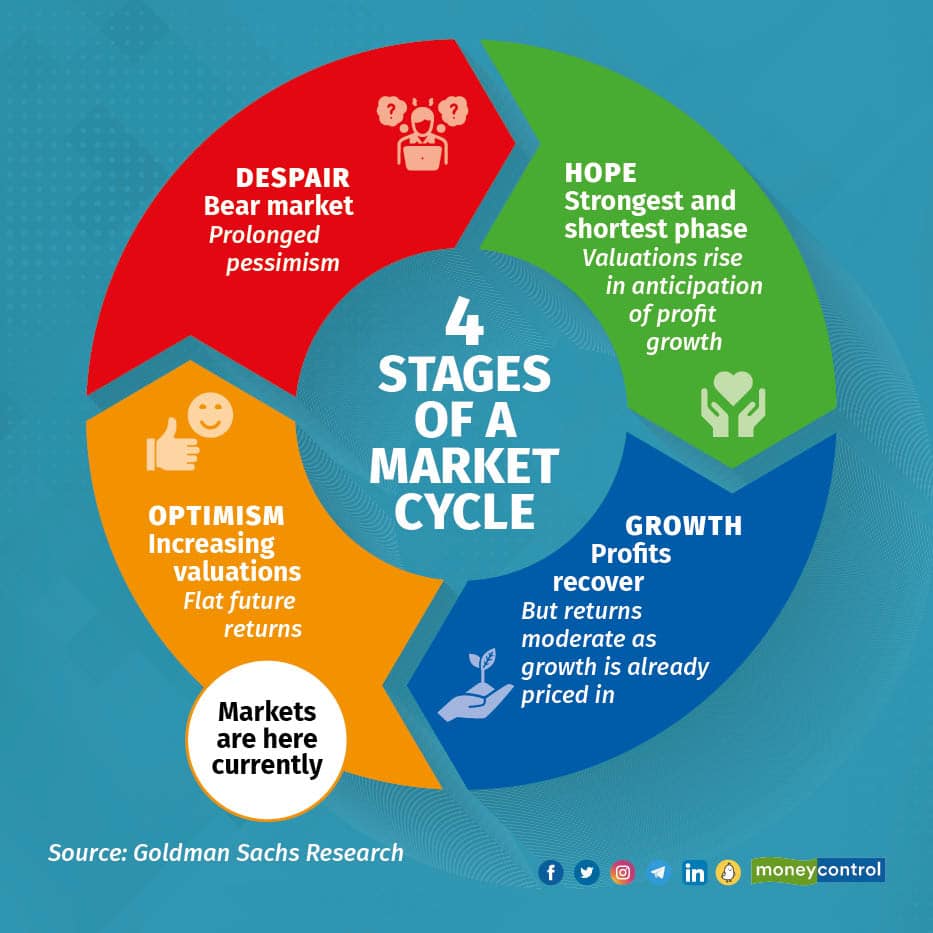
For investors aiming for sustained success, developing a keen market cycle understanding is not merely advantageous; it is fundamental. Financial markets rarely move in a straight line; instead, they exhibit cyclical patterns influenced by economic forces, corporate earnings, and investor sentiment. Recognizing these ebb and flow dynamics allows investors to make more informed decisions, mitigate risks, and potentially capitalize on opportunities across various market conditions. This awareness helps in formulating resilient investment strategies rather than reacting impulsively to short-term fluctuations.

Overview
- Market cycles are recurrent patterns of expansion, peak, contraction, and trough in economic and financial activity.
- Understanding these cycles helps investors make informed decisions, manage risk, and identify potential opportunities.
- Key drivers of market cycles include interest rates, inflation, consumer spending, and geopolitical events.
- Recognizing the current phase of a market cycle involves analyzing various economic indicators and market signals.
- Different investment strategies, such as asset allocation and sector rotation, can be applied to align with specific cycle phases.
- Investor psychology, marked by greed and fear, often amplifies market swings and presents behavioral challenges.
- A disciplined approach, based on market cycle knowledge, can help overcome emotional investing and avoid common pitfalls.
Foundations of Market Cycle Understanding
At its core, a market cycle represents the natural progression of an economy and its financial markets through distinct phases. These phases typically include expansion, where economic activity and asset prices generally rise; a peak, marking the highest point of growth before a downturn; contraction or recession, characterized by declining economic activity and falling asset values; and a trough, the lowest point before recovery begins. These cycles are not fixed in duration or intensity but are recurring. They are driven by a multitude of factors, including monetary policy decisions (such as interest rate changes by central banks like the Federal Reserve in the US), technological advancements, geopolitical events, and shifts in consumer and business confidence. A deep market cycle understanding involves recognizing that these drivers interact in complex ways, leading to periods of boom and bust that affect everything from equity markets to real estate and commodities.
Recognizing Phases in Market Cycle Understanding
Accurately identifying the current phase of a market cycle is crucial for strategic investment planning. This requires diligent observation and analysis of various economic indicators and market signals. Key economic indicators often include Gross Domestic Product (GDP) growth, unemployment rates, inflation data, consumer confidence surveys, manufacturing output, and corporate earnings reports. For instance, strong GDP growth, low unemployment, and rising corporate profits typically characterize an expansionary phase. Conversely, declining GDP, increasing unemployment, and squeezed corporate margins often signal a contraction. Beyond economic data, investors also look at market-specific indicators such as equity valuations, bond yields, and credit spreads. A period of irrational exuberance, where asset prices detach from fundamental value, might signal an impending peak, while widespread pessimism and low valuations could suggest a trough is forming. Developing this aspect of market cycle understanding allows investors to anticipate shifts rather than merely react to them.
Strategies for Market Cycle Understanding
Equipping oneself with a robust market cycle understanding empowers investors to adapt their portfolios to prevailing conditions. During expansionary phases, growth-oriented stocks and riskier assets tend to perform well. As the market approaches a peak, a shift towards more defensive sectors or assets like quality income stocks or short-term bonds might be prudent. During a contraction or recession, capital preservation becomes paramount, favoring defensive stocks, bonds, and potentially cash. Post-trough, during the early recovery, cyclical stocks and undervalued assets often present significant opportunities. Strategies like strategic asset allocation, which involves adjusting the mix of different asset classes, and sector rotation, moving investments between industries, are common approaches. Diversification across various asset classes, geographies, and sectors remains vital throughout all phases, helping to buffer against unexpected market shocks and ensuring a more stable return profile over the long term.
Behavioral Aspects of Market Cycle Understanding
Human psychology plays an undeniable role in shaping and often amplifying market cycles. Emotions such as greed and fear frequently drive irrational investment decisions, leading investors to buy at market peaks (driven by greed and fear of missing out) and sell at market troughs (driven by panic and fear of further losses). This procyclical behavior can exacerbate market swings and lead to suboptimal investment outcomes. A disciplined approach, grounded in market cycle understanding, helps investors to counteract these natural human tendencies. By having a clear framework for what to expect in different market phases, investors can resist the urge to chase returns during bubbles or panic during downturns. Maintaining a long-term perspective and sticking to a predefined investment plan, rather than allowing emotions to dictate actions, is critical for achieving success across the entirety of a market cycle.